Sheet in. Facts confirmed.Issued record out.
One
The sheet goes in
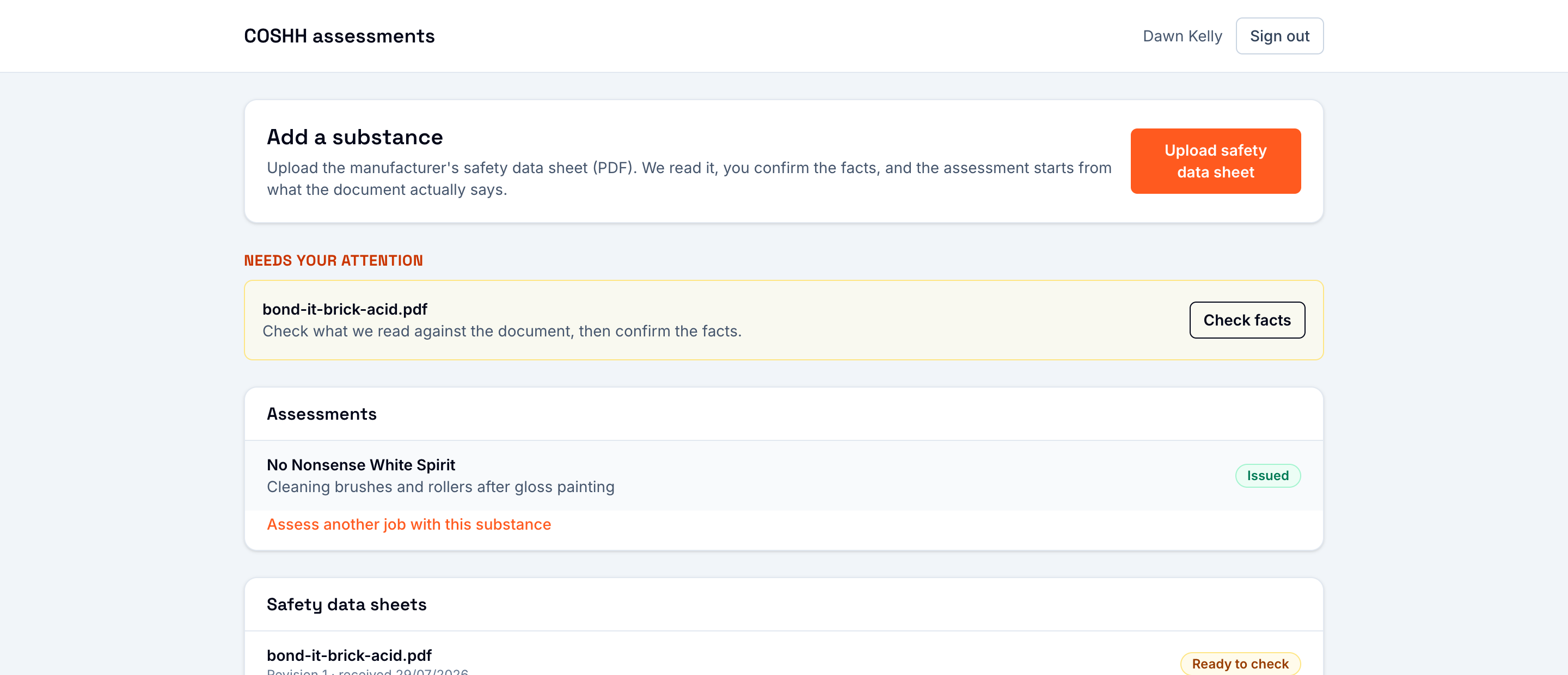
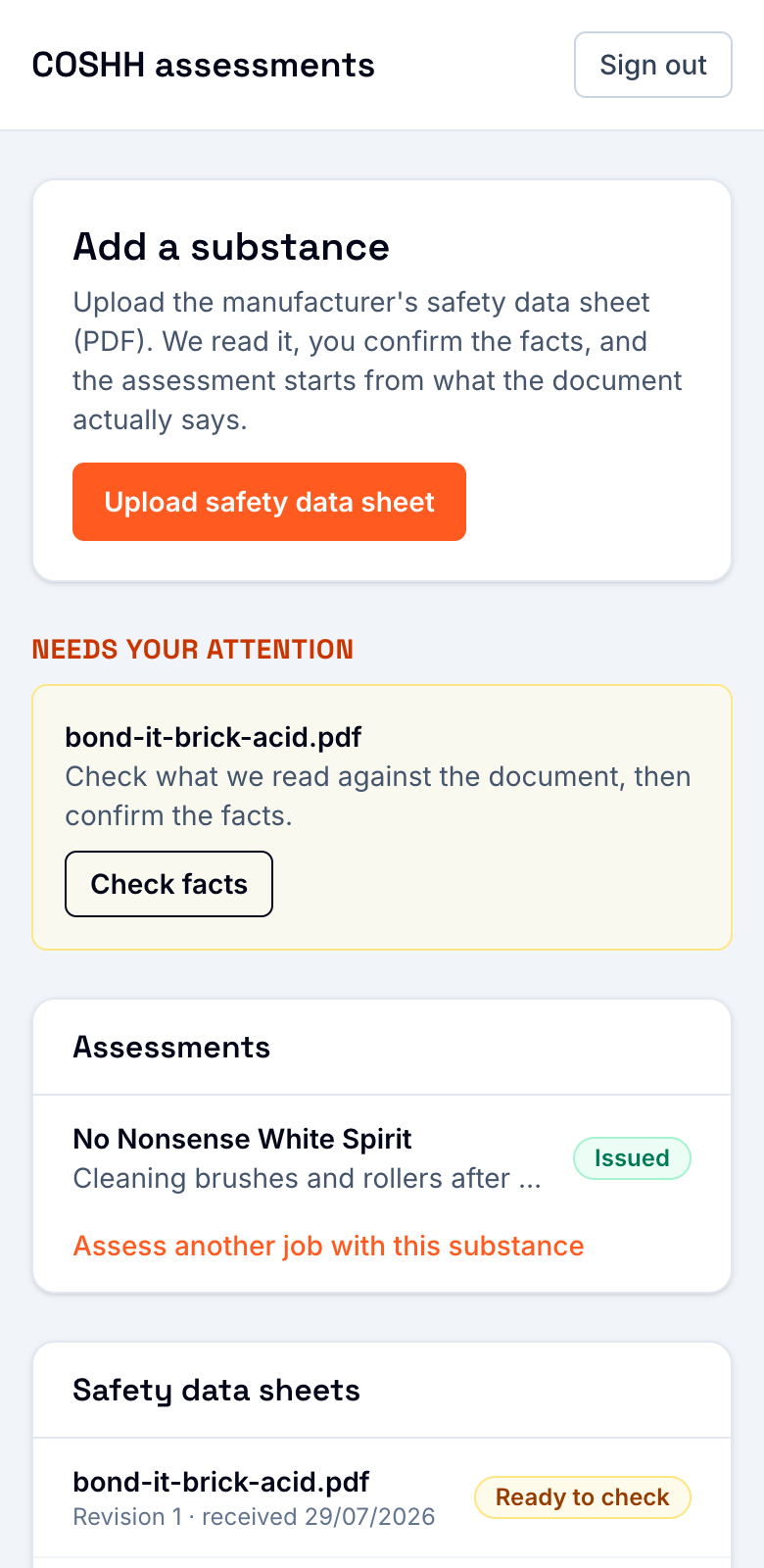
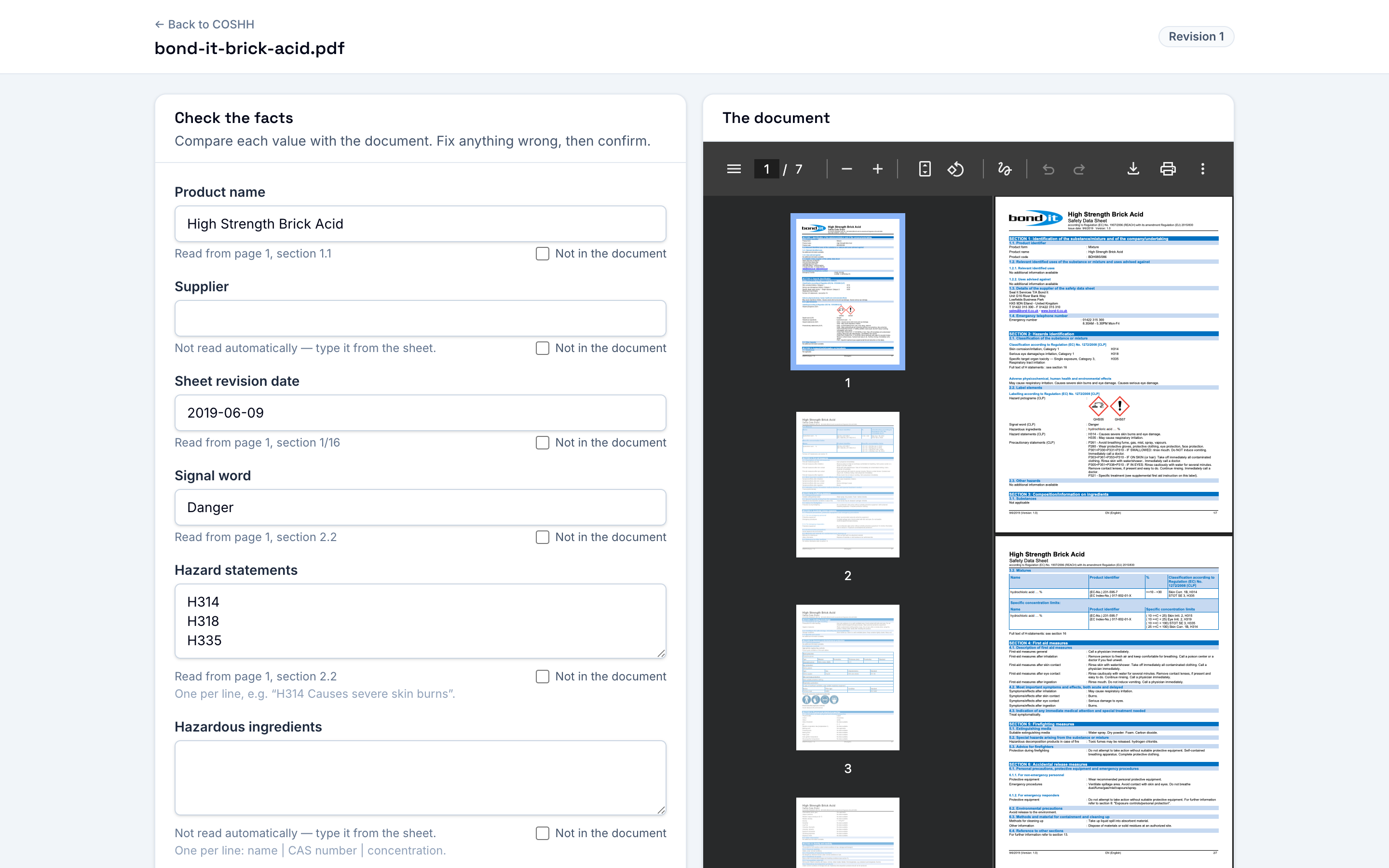
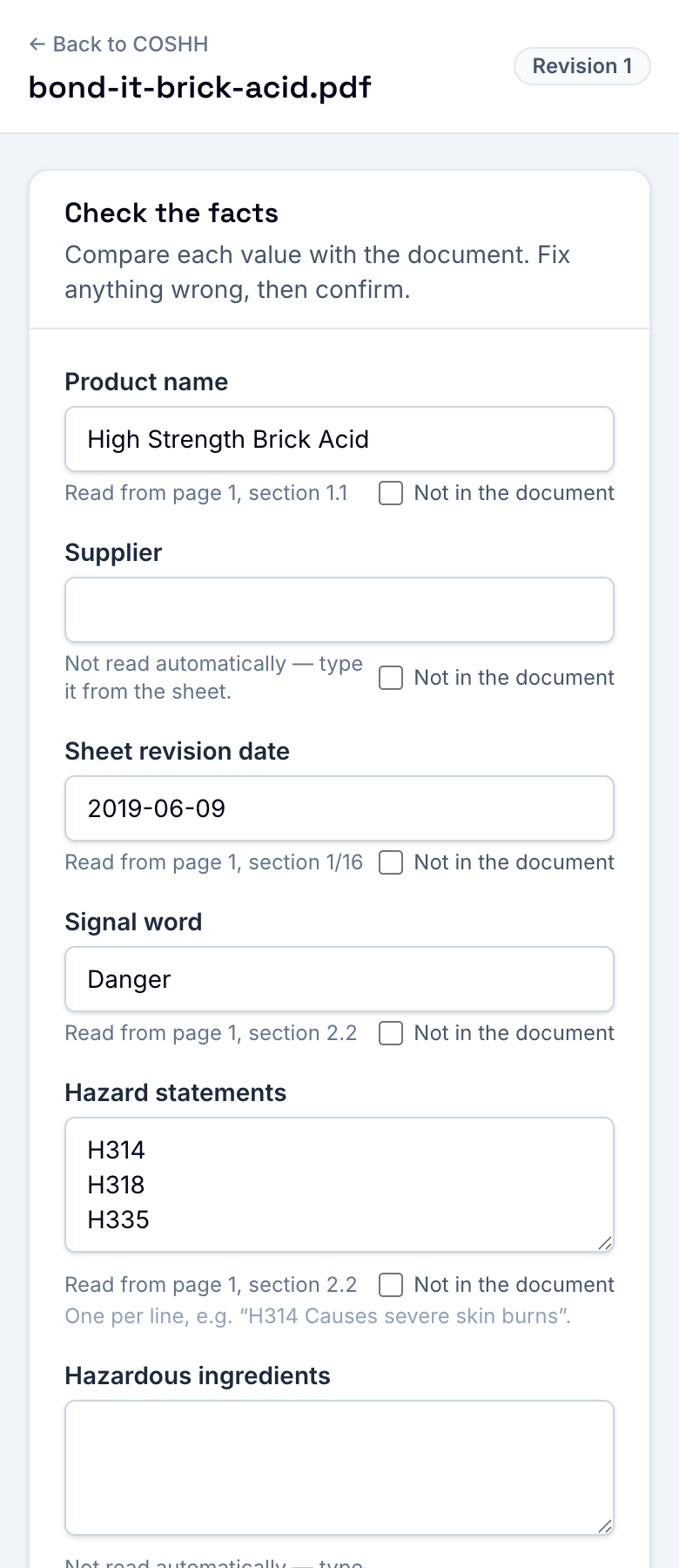
Upload the supplier’s safety data sheet. The tool reads it and shows you what it found beside the document itself — each value labelled with the page and section it came from. Where it cannot prove a value, it says so and asks you to type it rather than guessing.
Two
You make the judgement
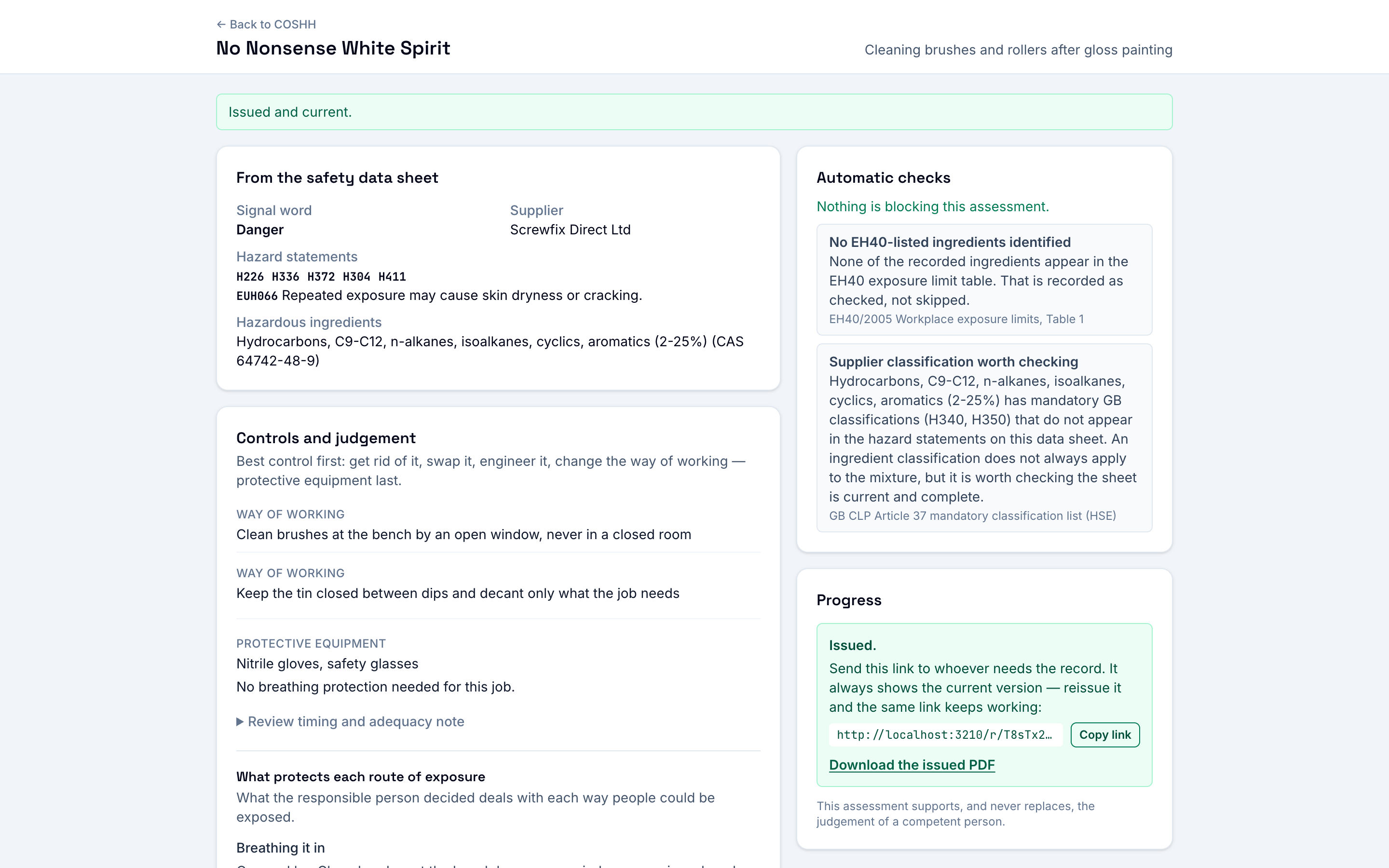
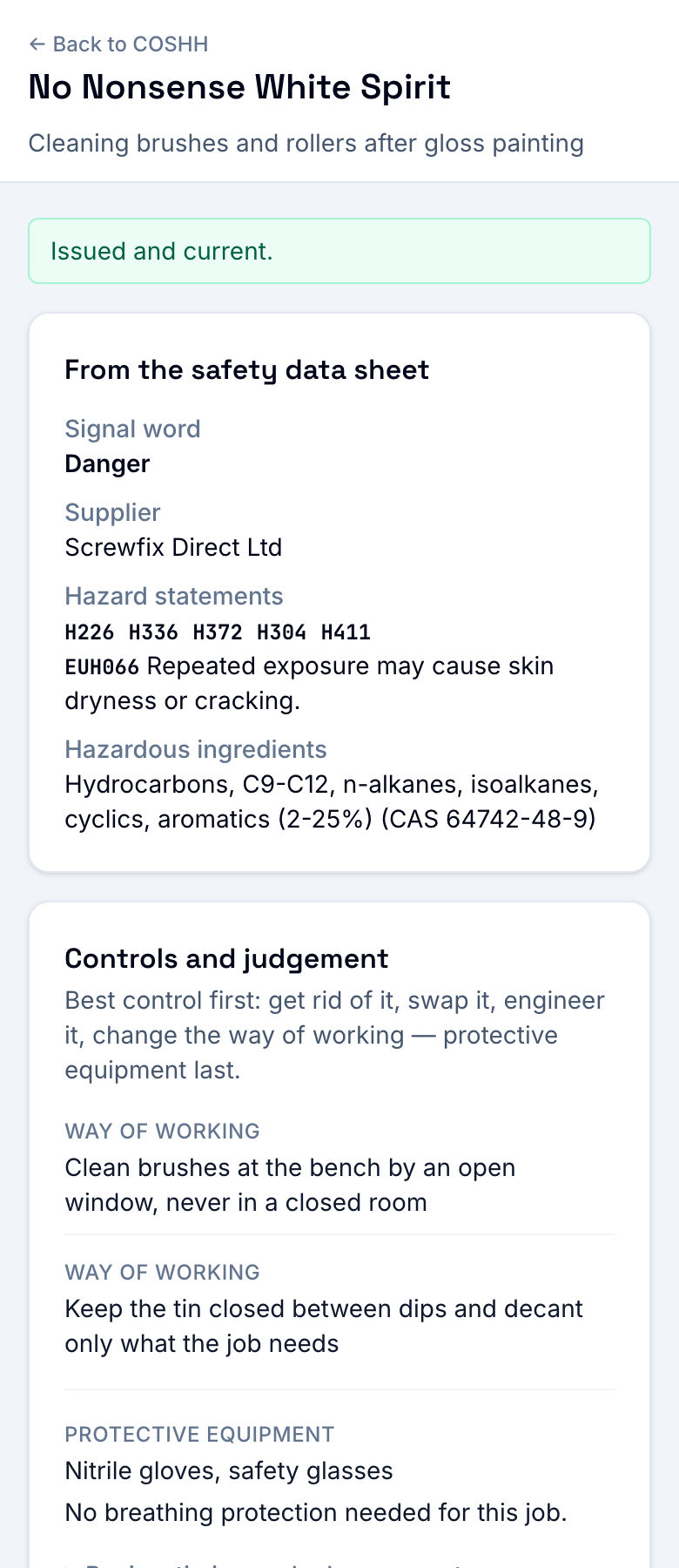
Describe the job and who is exposed. Controls arrive as proposals drawn from the sheet you just confirmed — one tap to accept, then edit them to fit the job, or type your own. Nothing is ticked for you, and for each exposure route you say explicitly which controls cover it.
Three
It issues, and it goes to the person doing the work
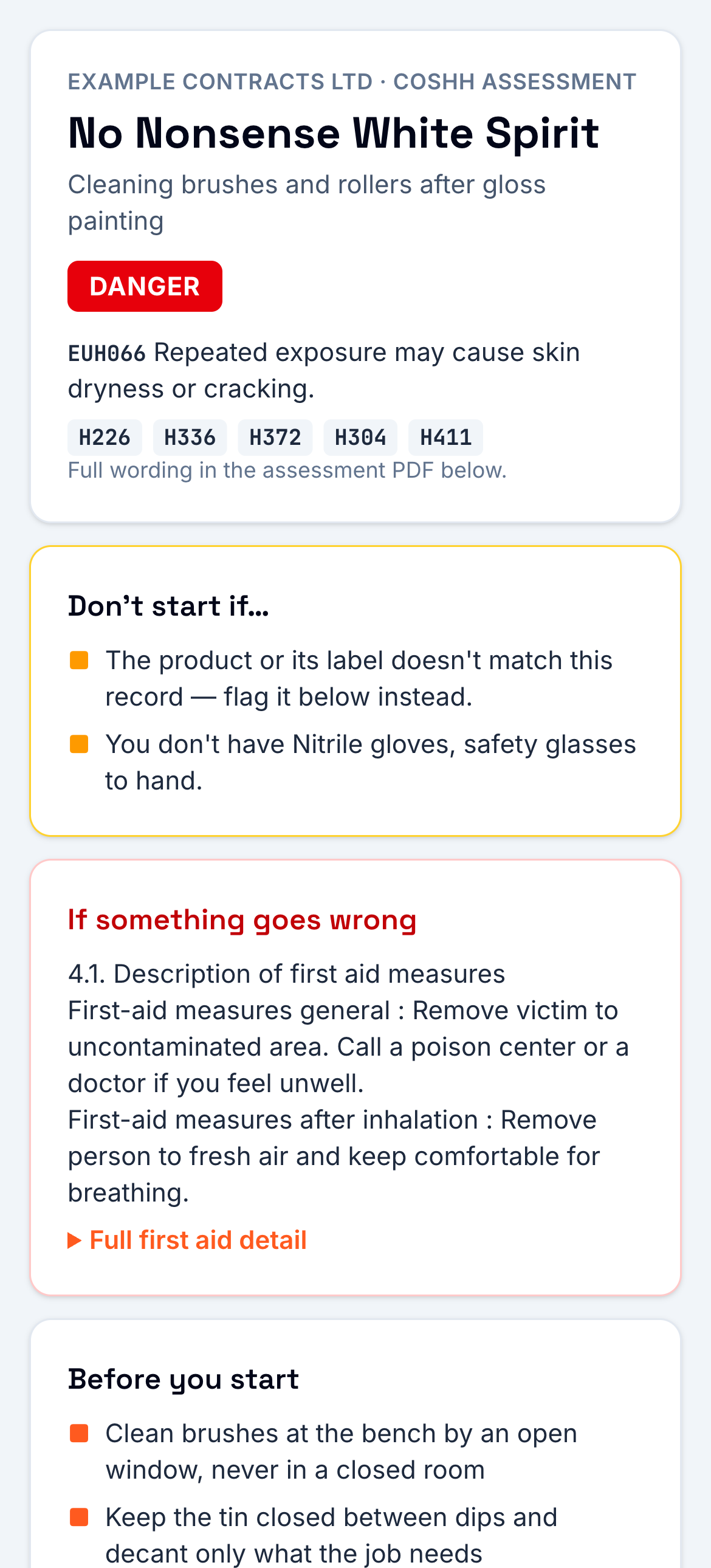
One action issues the assessment when you are the responsible person. You get a versioned record, a PDF for the file, and a link that always resolves to the current version — reissue it and the same link keeps working. On the other end of that link is a page written for someone standing next to the tin, not for a filing cabinet.
Where it stops
What it does not do.
Worth reading before you start, not after. Every one of these is a deliberate limit.
It does not decide your controls
It proposes them from the sheet and the job. You choose, you edit, you sign. The issued document says on its face that it supports and never replaces the judgement of a competent person.
It does not invent facts
Hazards, classifications and exposure limits come from the confirmed sheet and from HSE’s published data. Where the sheet is silent, the record says so instead of filling the gap.
It starts from a safety data sheet
Substances that arrive without one — silica from cutting, wood dust, welding fume — are outside what it does today. That is a real limit, not a roadmap item we are being coy about.
It does not submit anything anywhere
The record is yours. You send the link to whoever needs it; nothing is filed with anyone on your behalf.
The way through
Start from the sheet the supplier already gave you.
No preamble, no set-up, no data migration. The first assessment starts with the first sheet you upload.
- 01
Upload the supplier safety data sheet.
- 02
Check the facts it read, and correct anything wrong.
- 03
Say what the job is and who is exposed.
- 04
Choose the controls, and confirm what covers each route.
- 05
Issue it. Send the link.